Children's Party Entertainment: What to Check Before You Book
Parties
Why “Book an Entertainer” Is Not a Plan
Booking a children’s entertainer is one of those tasks that seems straightforward until you start asking questions. The market is enormous, the quality varies widely, and the thing that delights a room of four-year-olds can bore a group of eight-year-olds within minutes.
This guide is not an ideas list. It covers the practical decisions and checks that parents and carers often overlook - the things that determine whether entertainment actually works on the day.
Age Suitability Is the First Filter
The single most important factor in choosing children’s entertainment is the age of the children. A performer who is brilliant with toddlers may fall flat with year-sixes, and vice versa.
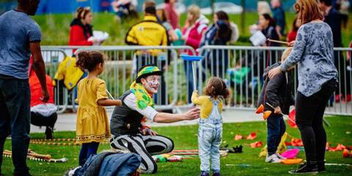
Most professional entertainers specialise in age brackets - typically under-5s, 5–8, or 8–12. Some cover a wider range, but it is worth asking exactly how they adjust their act for different ages. A show designed for three-year-olds should be short, visual, and involve simple participation. A show for nine-year-olds needs to be more sophisticated, with humour that does not feel babyish.
If your party has a wide age range, consider whether you need one act that spans the whole group or two separate activities for different ages. At a birthday party with siblings and friends of varying ages, splitting the group for part of the time often works better than trying to hold everyone’s attention simultaneously.
Questions to ask
- What age range is your act designed for?
- How do you adjust it for younger or older children?
- What happens if some children do not want to join in?
Performance Duration vs Party Length
A two-hour party does not need two hours of entertainment. Children - especially younger ones - need breaks. They need to eat, run around, open presents, and simply decompress. Overfilling the schedule with continuous performance leads to overstimulation and meltdowns, not a better party.
As a rough guide:
- Under-5s party (1.5–2 hours): 30 to 45 minutes of entertainment, broken into two shorter slots with food and free play in between
- 5–8 party (2 hours): 45 to 60 minutes of entertainment, with a food break
- 8–12 party (2–2.5 hours): Up to 90 minutes, but with variety - a mix of activities rather than a single long performance
Many entertainers offer standard packages timed to specific durations. Check whether their package aligns with your party length. If their show is 45 minutes and your party is two hours, you still need to plan the rest of the time.
DBS Checks and Safeguarding
Anyone working professionally with children in the UK should hold a current DBS (Disclosure and Barring Service) check. This is non-negotiable. A DBS check does not guarantee safety on its own, but its absence is a clear warning sign.
When you ask about DBS status, a professional entertainer will not hesitate to confirm - they expect the question. If someone is evasive, vague, or tells you it is “not required,” move on.
Beyond the DBS check, consider the following:
- Will the entertainer be alone with children at any point? At most birthday parties, parents are present, but if children are being supervised solely by the entertainer (common at larger events), you need to be confident in their safeguarding training.
- Does the entertainer have a safeguarding policy? Larger entertainment companies will have a written policy. Solo performers may not have a formal document, but should be able to explain their approach.
Public Liability Insurance
Public liability insurance covers injury to third parties and damage to property during the performance. It is standard for professional entertainers and most venues require it.
If you are hiring entertainment for a party in a village hall, community centre, or any booked venue, the venue will almost certainly require proof of insurance from any external supplier. Ask the entertainer for a copy of their certificate before the event, and check the cover amount - £1 million to £5 million is typical.
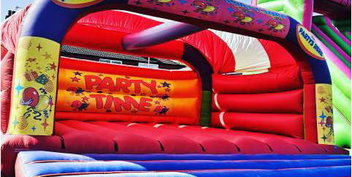
For inflatables and bouncy castles, insurance is especially important. The supplier should have specific cover for inflatable equipment, including setup, supervision guidance, and weather conditions under which the equipment should not be used.
Inflatables: Extra Checks
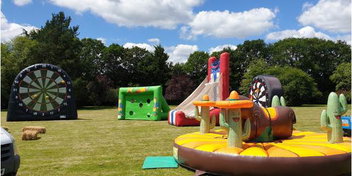
Bouncy castles and inflatable slides are among the most popular forms of children’s party entertainment, and they carry more risk than most other options. If you are booking an inflatable:
- Ask about PIPA or RPII registration. These are industry inspection schemes that ensure inflatables are regularly safety-tested. A registered supplier will have inspection tags on their equipment.
- Check the setup requirements. Inflatables need flat ground, ideally grass. They need to be staked down (not just weighted with sandbags on a windy day). They need a power source within reach. They should not be used in wind speeds above the manufacturer’s recommendation - typically around 24 mph.
- Clarify supervision responsibilities. Some suppliers provide an attendant; others deliver and leave. If no attendant is provided, the responsibility for supervising children on the inflatable falls to you. Know this in advance and plan accordingly.
- Check the maximum number of users and age/height limits. Mixing toddlers and older children on the same inflatable is one of the most common causes of injury.
Face Painters and Craft Activities
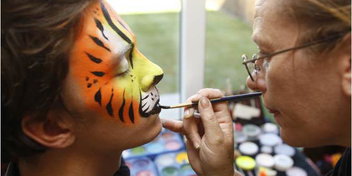
Face painting and craft activities work well as “rolling” entertainment - children dip in and out as they please. This makes them useful alongside a main act or during food time.
For face painters:
- Ask about the products they use. Professional face paints should be cosmetic-grade and hypoallergenic. Cheap paints from non-specialist sources can cause skin reactions.
- Check their speed. If a face painter takes 15 minutes per child and you have 20 children, most will not get painted. A good party face painter should manage simpler designs in 3–5 minutes, with more elaborate options for children willing to wait.
- Consider allergies. Ask parents in advance about skin sensitivities. A professional face painter will carry out a patch test if there is any doubt, but it helps to know beforehand.
For craft activities:
- Check what is included. Does the supplier bring all materials, or do you need to provide tables, chairs, and protection for surfaces?
- Age-appropriate crafts. Glue guns and scissors are not suitable for under-5s. Check what tools are involved.
- Mess factor. If your party is in a venue with carpeted floors, paint and glitter-based crafts are risky. Ask what level of mess to expect and whether the supplier handles cleanup.
Venue Considerations
Before you book any entertainment, check the following with your venue:
- Space. A magician needs a small performance area. A bouncy castle needs outdoor space plus a margin around it. A disco needs a clear floor and a power supply. Measure the available area before committing.
- Noise. If your venue is in a residential area or shares walls with other rooms, check noise limits. Discos and amplified music may need to be kept below a certain volume.
- Power. Inflatables, disco equipment, and bubble machines all need mains electricity. Know where the sockets are and whether you need extension leads. Check the venue’s policy on running cables across walkways.
- Access. If the entertainer needs to bring in heavy equipment, check loading access, door widths, and whether there are stairs.
Getting the Most From Your Booking
Once you have chosen and booked your entertainer, a short conversation before the day will help everything run smoothly:
- Share the party timeline. When does the entertainer arrive? When do they start? When is food? When do they finish?
- Mention any children with additional needs. A good entertainer will adapt their show if they know in advance.
- Agree a setup time. Most entertainers need 15 to 30 minutes to set up. Make sure this is built into your venue booking.
- Confirm what you need to provide. Tables, chairs, power, a specific room - check so there are no surprises.
- Exchange mobile numbers. If there is a delay on the day, you need to be able to reach each other.
The difference between a party that runs smoothly and one that does not usually comes down to these practical details, not the choice of entertainer. Do the groundwork and the entertainment takes care of itself.