Wedding Ceremony Songs: How to Choose Music That Works
Weddings
Why Ceremony Music Matters More Than You Think
The ceremony is the part of a wedding that guests remember most clearly, and the music you choose shapes its atmosphere entirely. Get it right and the songs frame each moment - the entrance, the signing, the exit - without drawing attention to themselves. Get it wrong and you end up with awkward silences, a track that cuts out mid-aisle, or a volume level that drowns out the officiant.
This guide focuses on the decisions behind the music, not on compiling yet another “top 50” list. The right song depends on your venue, your ceremony type, your performers, and your own taste. Here is how to think it through.
The Three Key Moments
Most ceremonies have three musical slots, and each one has a different job.
The Processional
This is the music that plays as the wedding party and, finally, the bride or groom walk down the aisle. It sets the emotional tone for the whole ceremony. If you are working with live musicians, check how long the aisle walk is likely to take. A piece that sounds beautiful for ninety seconds can feel stretched at three minutes. Ask your musician whether they can loop a section or extend an intro naturally - this is something experienced players handle routinely.
The Signing of the Register
This is the practical gap while paperwork is completed. It typically lasts five to ten minutes, and silence during it can feel flat. One or two pieces of music work well here. This slot is a good place for something slightly less formal - a favourite song performed acoustically, for instance. If you are using recorded music, prepare a short playlist rather than a single track, so there is no abrupt stop if signing runs over.
The Recessional
The exit music. This is usually more upbeat than the processional and signals a shift from ceremony to celebration. It only needs to last as long as it takes for the couple and guests to leave the venue, so pick something with energy from the first bar rather than a slow build.
Live Music vs Recorded
Both work, and neither is automatically better. What matters is whether your choice suits the space.
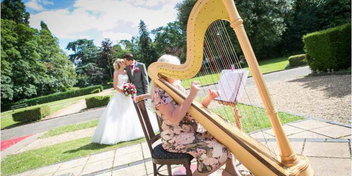
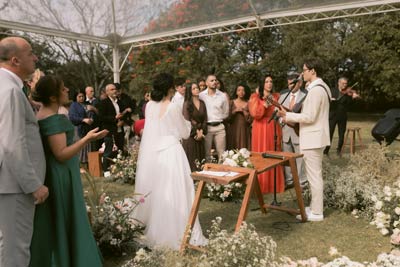
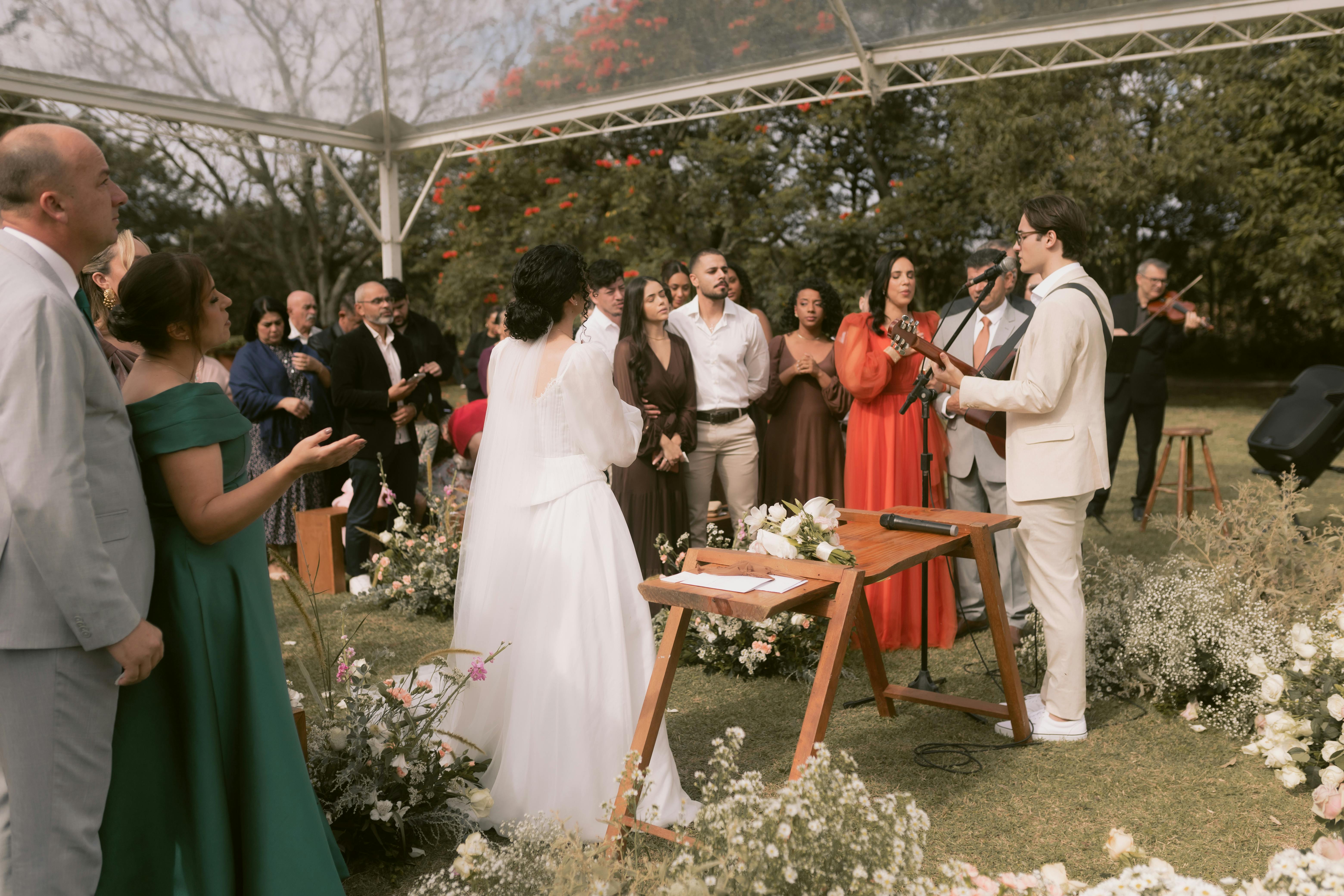
Live musicians add a sense of occasion and can adapt in real time - speeding up if you arrive at the altar sooner than expected, or extending a piece if there is a delay. A string quartet, solo harpist, or acoustic guitarist can fill a church or outdoor space without needing amplification. The trade-off is cost and logistics: you will need to confirm the venue can accommodate them, and they will usually need a rehearsal or sound check.
Recorded music offers total control over the exact arrangement and version of a song. It is also simpler to manage - one device, one speaker, one playlist. The risk is that it can feel impersonal if the sound quality is poor or the volume is misjudged. If you go this route, visit the venue in advance to test the system, and assign someone reliable to press play at the right moment.
A growing number of couples use a combination: live music for the processional and recessional, and a curated playlist for the signing.
Venue Acoustics and Restrictions
Venues vary enormously in how they handle sound. A stone church with high ceilings will amplify acoustic instruments and create natural reverb, which is flattering for a solo vocalist or string group but can muddy amplified sound. A modern function room with low ceilings and carpet will absorb sound, meaning quieter instruments may not carry.
Visit the venue and listen. Clap your hands and notice the echo. This tells you more than any spec sheet.
Some venues have restrictions. Churches, particularly Church of England, may limit you to hymns and religious music during the ceremony itself. Civil ceremonies held in licensed venues must be entirely secular - no hymns, no religious references in lyrics. Check this early. It is easier to choose music within the rules from the start than to fall in love with a track and discover it is not permitted.
Civil vs Religious Ceremonies
In a civil ceremony, music must contain no religious content. This is a legal requirement, not a guideline. The registrar will usually ask to see your music choices in advance. Instrumental versions of songs with religious lyrics are generally acceptable, but confirm with your registrar.
In a religious ceremony, the officiant may have their own expectations. Some clergy are relaxed about contemporary music; others prefer traditional hymns. Ask early and be specific - rather than “can we have modern music?”, give them your actual shortlist.
How to Brief a Musician or DJ
If you are booking a live musician or DJ for the ceremony, a clear brief saves time and avoids surprises.
Include the following:
- The three moments and what you want played for each, including any specific songs or a mood description if you have not decided yet
- Ceremony duration - roughly how long each section will last
- Venue details - size of room, whether amplification is available or needed, any sound restrictions
- Ceremony type - civil, religious, or humanist - so they know the content rules
- Cue points - who signals the musician to start? Is it when the doors open, when the bride appears, or on a nod from the officiant?
Most professional ceremony musicians have played dozens of weddings and will have suggestions if you are unsure. Do not feel you need to arrive with everything decided. A good supplier will guide you through the options once they understand the setting and your preferences.
Practical Tips
- Test your choices at the venue. A song that sounds lovely on headphones may not work in the space.
- Have a backup plan for outdoor ceremonies. Wind and ambient noise affect acoustic instruments. A portable speaker with a playlist is a sensible plan B.
- Think about transitions. The gap between processional and signing can feel odd if the music just stops. Ask your musician how they handle the switch.
- Keep it to three or four pieces total. The ceremony is typically 20 to 30 minutes. Less music, well chosen, has more impact than filling every second.
The best ceremony music is the kind that makes the moment feel exactly as you hoped it would - without anyone having to think about the logistics behind it.